Embarking on a new website project is an exciting step for any business, whether you are a brand-new coffee shop in Hackney or an established financial consultancy in Canary Wharf. However, the first question we often hear during our initial strategy sessions isn't about colours or logos—it's about functionality. "What kind of website do I actually need?"
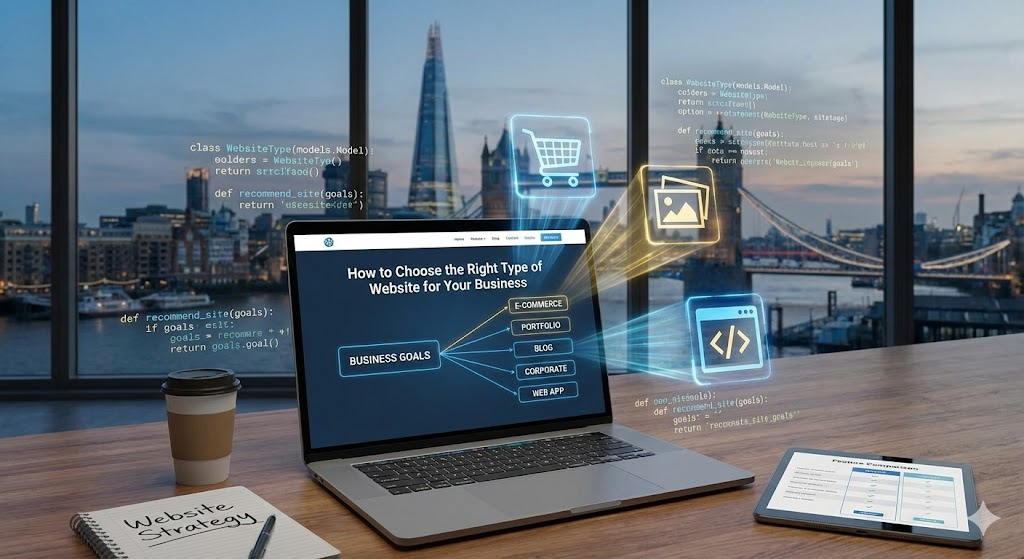
The term "website" is a broad umbrella covering everything from a single landing page to a complex enterprise platform like Amazon. Choosing the wrong type can be a costly mistake: over-engineer it, and you waste budget on features you don't use; under-engineer it, and you limit your business's ability to grow. At Custom Coded Websites, we believe in building the right tool for the job. Here is a guide to helping you decide which digital architecture suits your specific business needs.
1. The Brochure Website (Portfolio Site)
Think of this as your digital business card. A brochure website is primarily informational. Its main goal is to establish credibility, showcase your past work, and provide contact details.
Who is it for? This is ideal for service-based businesses that rely on face-to-face interactions or phone calls to close deals. If you are a local tradesperson, such as a landscaper or an electrician, you likely need a clean, fast-loading site that displays your services, a gallery of recent projects, and a clear "Get a Quote" button.
The Technical Side: While these sites are "simple," they must still be fast and mobile-responsive. We often build these with a lightweight structure to ensure they rank well for local search terms like "Electrician in Islington."
2. The Content Management System (CMS)
A CMS is necessary if you plan to update your website frequently without touching code. This allows you to publish blog posts, update news, or change service descriptions via a user-friendly dashboard.
Who is it for? If content marketing is part of your strategy (which it should be for most London businesses looking to improve SEO), you need a CMS. This suits consultancy firms, marketing agencies, or educational bodies that need to share industry insights regularly.
Our Approach: While WordPress is a common option, we specialise in building custom CMS solutions using Django. This gives you the ease of editing content without the security vulnerabilities and "bloat" associated with generic WordPress themes. You get a dashboard tailored exactly to your workflow, not a cluttered interface filled with irrelevant options.
3. E-commerce Platforms
An e-commerce site is an online store where transactions happen directly. This involves product catalogues, shopping carts, payment gateways (like Stripe or PayPal), and inventory management systems.
Who is it for? Retailers, fashion brands, or anyone selling digital or physical goods. If you are a boutique in Notting Hill wanting to reach customers globally, this is your vehicle.
Key Considerations: Security is paramount here because you are handling sensitive customer data. Off-the-shelf builders like Shopify are popular, but they take a significant cut of your profits and limit customisation. A custom Python-based e-commerce site offers robust security, lower transaction fees in the long run, and the ability to create unique shopping experiences, such as the drops and inventory feeds we built for Anime Weebs.
4. Web Applications
A web application is more "software" than "website." It involves complex user interactions, data processing, and dynamic functions. It’s not just about reading content; it’s about doing something.
Who is it for? Start-ups and businesses digitising manual processes. Examples include:
- Booking Systems: Real-time appointment scheduling for clinics or salons.
- Client Portals: Secure areas where clients can log in to view documents or track progress.
- SaaS Products: Tools that generate documents or process data, similar to the automated deed poll platform we developed for UK Name Change.
Why Custom Code is Essential: Templates simply cannot handle the logic required for a web app. This requires a powerful framework like Django to manage databases, user authentication, and complex algorithms securely and efficiently.
5. How to Decide: Three Questions to Ask
If you are still unsure, ask yourself these three questions regarding your business roadmap:
What is the primary goal of the site?
Is it to inform (Brochure), to educate and capture leads (CMS), to sell directly (E-commerce), or to solve a functional problem (Web App)? Define the conversion event first.
How much traffic do you expect?
If you anticipate high traffic volumes or sudden spikes (e.g., ticket sales or product drops), a generic hosting plan and template might crash. Custom Python solutions are built to scale effortlessly.
What are your security requirements?
If you are storing medical records, legal documents, or financial data, relying on a plugin-heavy template is a risk. Custom development ensures enterprise-grade security protocols are baked in from the start.
Summary
Choosing the right website type is about balancing your current budget with your future ambitions. In a city as competitive as London, your digital presence is often the deciding factor for potential clients. Whether you need a high-performance brochure site or a sophisticated web application, the underlying code matters.
At Custom Coded Websites, we help you navigate these choices to ensure you invest in a solution that delivers a tangible return on investment.
Not sure which path is right for you? Book a free consultation with our team today, and let's define the perfect digital strategy for your business.