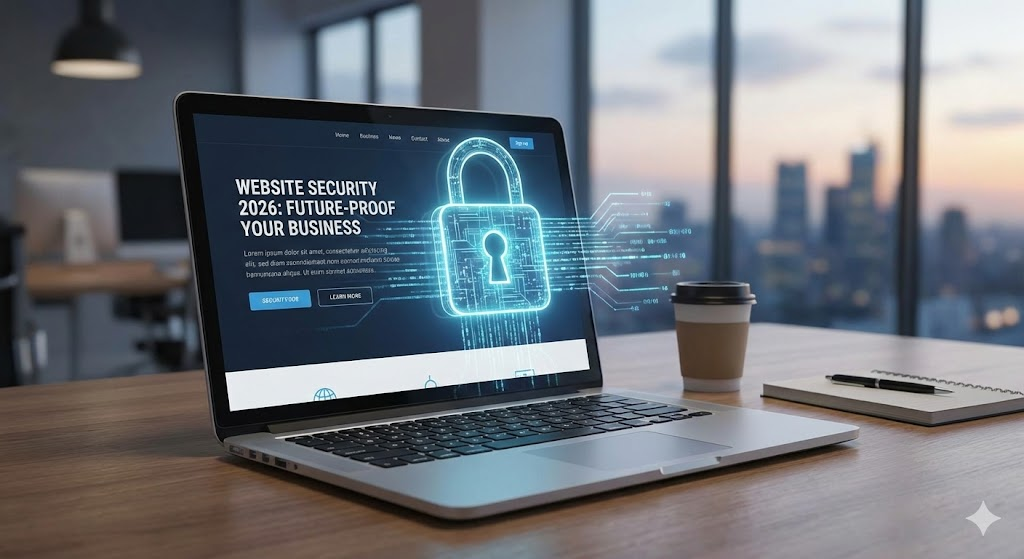
The digital threat landscape has changed dramatically. If you are still relying on security advice from 2020, your business is exposed. As we move through 2026, the rise of AI-driven cyber attacks means that hackers no longer need to be coding geniuses; they have automated bots that scour the web 24/7, looking for the smallest crack in your digital armour.
For London businesses, the stakes are incredibly high. A data breach doesn't just cost money in technical repairs; it costs you your reputation and creates a nightmare of GDPR compliance issues with the ICO (Information Commissioner's Office). At Custom Coded Websites, security is not an afterthought—it is the foundation of our architecture. Here is how to keep your digital doors locked in 2026.
1. Move Beyond Basic SSL (HTTPS)
By now, everyone knows they need the little padlock icon (SSL certificate) in the browser bar. But in 2026, that is just the bare minimum. It encrypts the connection between the user and the site, but it doesn't protect the server itself.
The Upgrade: Ensure you are using the latest TLS 1.3 protocols. Furthermore, implement HSTS (HTTP Strict Transport Security). This forces browsers to interact with your website only using a secure HTTPS connection, preventing "downgrade attacks" where hackers try to trick your site into using an insecure line.
2. The "Plugin" Danger Zone
The single biggest vulnerability for most small businesses is their Content Management System (CMS). If you are using a generic WordPress theme with 20 different plugins, you have 20 different potential entry points for a hacker. If one plugin developer stops releasing updates, your entire site becomes vulnerable.
The Custom Solution: Minimize your attack surface. This is why we advocate for Custom Python/Django development. By building bespoke features rather than installing third-party plugins, we reduce the number of "moving parts" that can be exploited. Django also releases security patches that are robust and enterprise-grade, unlike the "wild west" of the WordPress plugin repository.
3. Implement Multi-Factor Authentication (MFA)
Password cracking tools have become terrifyingly fast. A standard 8-character password can be cracked in seconds. Relying on passwords alone is negligence.
The Policy: Enforce Multi-Factor Authentication (MFA) for every single administrative account. Whether it is your CMS login or your hosting panel, require a second code from an app like Google Authenticator or a hardware key (YubiKey). This creates a barrier that automated bots simply cannot cross.
4. Defend Against SQL Injection
This is a classic attack that is still prevalent in 2026. Hackers input malicious code into your website’s contact forms or search bars to trick your database into revealing private customer data.
The Technical Edge: Standard PHP sites are historically prone to this if not coded perfectly. Our framework, Django, protects against SQL injection by default. It separates data from code, meaning that even if a hacker tries to input a command into your search bar, the system treats it as harmless text rather than an executable instruction.
5. Automated Off-Site Backups
Security is about prevention, but it is also about resilience. What happens if the worst occurs—a ransomware attack locks your files?
The Safety Net: You need an "air-gapped" backup strategy. This means your backups should not be stored on the same server as your website. We configure automated daily backups to secure, encrypted cloud storage (like Amazon S3) in a different region. If your site is compromised, we can wipe the server and restore a clean version from yesterday within minutes.
6. Regular Security Audits and Pentesting
You cannot fix what you don't find. Many businesses launch a site and never check it again.
The Routine: Schedule regular penetration testing ("pentesting"). This involves ethical hackers trying to break into your site to find weaknesses before the bad guys do. For businesses handling sensitive financial or legal data—like our clients in the City—this is often a regulatory requirement.
Conclusion
In 2026, security is an active process, not a product you buy once. Your customers trust you with their data; it is your duty to protect it.
If you are worried about the security of your current legacy website, do not wait for a breach to take action.
Contact Custom Coded Websites today for a comprehensive security audit.