
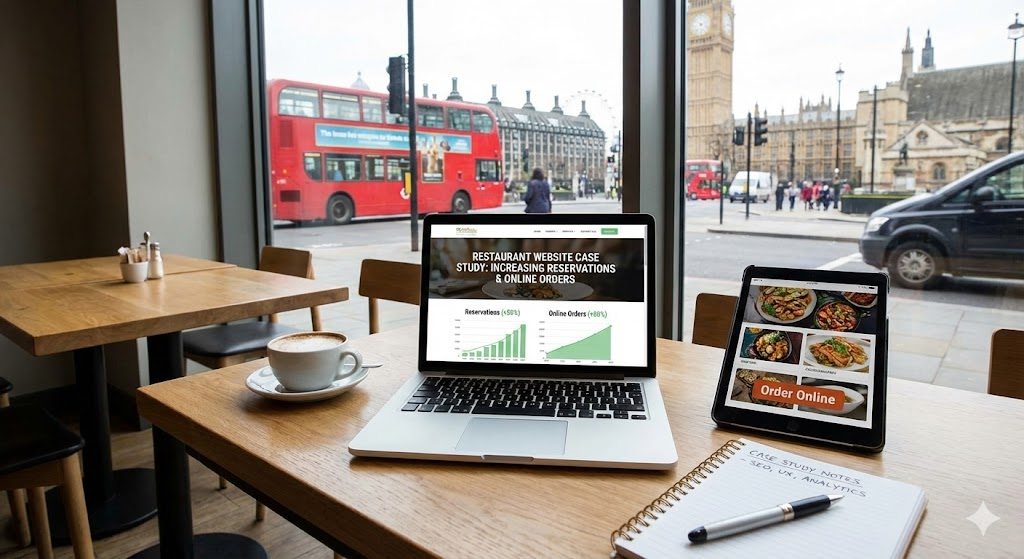
In London’s vibrant culinary scene, a restaurant’s digital storefront is as important as its physical menu. The Copper Whisk, a high-end modern European bistro with locations in Shoreditch and Canary Wharf, was struggling to translate their local popularity into online growth. Their previous website was a static template that relied on slow-loading PDFs for menus and a clunky third-party widget for bookings that didn't work on mobile devices.
They turned to Custom Coded Websites to build a high-performance digital hub that could handle peak-time reservation surges and provide a seamless "one-click" ordering experience for the local office crowd. Here is how we used Python and Django to cook up a 180% increase in total digital revenue.
The Challenge: Friction in the Dining Journey
The Copper Whisk faced three primary digital hurdles that were impacting their bottom line:
- The PDF Problem: Customers had to download a file to see the menu. This is a massive friction point for mobile users in London who want to see prices and allergens instantly.
- Booking Drop-offs: Their third-party booking tool required four redirects, leading to a 50% abandonment rate during the busy Friday evening rush.
- Mobile Latency: The site took over 6 seconds to load. For a hungry diner looking for a quick lunch in Old Street, that's long enough to choose a competitor.
The CCW Solution: A "Mobile-First" Dining Platform
Our co-founders, Charlie Shortman and Louie Long, designed a bespoke solution that prioritized speed, appetite appeal, and transaction efficiency. We moved the business away from generic builders and onto a custom Django framework.
1. Dynamic, SEO-Optimized Menus
Charlie Shortman engineered a custom backend that turned their menu into a dynamic database. Instead of static files, the menu is now fully searchable and indexable by Google. This allowed the restaurant to rank for specific dish-based searches like "Best Truffle Pasta Shoreditch." The staff can now update prices or mark items as "Sold Out" in real-time from a simple Django dashboard.
2. Frictionless Booking & Takeout Integration
Louie Long focused on a "Zero-Redirect" philosophy. We built a custom-coded reservation engine integrated directly into the site’s header. We also developed a bespoke online ordering system for their Canary Wharf lunch trade. By integrating Stripe for Apple Pay and Google Pay, we made it possible for an office worker to order and pay for a meal in under 45 seconds.
3. Local SEO for London Foodies
To capture the local market, we implemented Restaurant Schema Markup. This ensures that their opening hours, price range, and "Book a Table" link appear directly in the Google Search results. By optimizing the site to load in under 0.9 seconds, we ensured they passed all Core Web Vitals, giving them a significant ranking boost over slower competitors in the Hackney and Tower Hamlets areas.
The Results: 85% More Reservations
The transition to a custom-coded platform transformed The Copper Whisk’s operations within the first four months:
- Reservations: Online table bookings increased by 85%, significantly reducing the volume of phone inquiries.
- Online Orders: Digital takeout revenue tripled, driven by the new mobile-optimized checkout.
- User Engagement: The average time spent viewing the menu increased by 200% as the "PDF hurdle" was removed.
- Search Visibility: The restaurant moved into the "Top 3" of the Google Map Pack for their primary locations.
Why Restaurants Need Custom Code to Compete in London
The Copper Whisk’s success proves that for hospitality brands, "good enough" templates are a liability. A Django-powered website from Custom Coded Websites offers the speed and reliability that a busy kitchen demands, with the SEO precision needed to win in London’s crowded food scene.
Based in London, we understand the pace of the city’s hospitality industry. We don't just build websites; we build high-speed engines that fill tables and drive sales.