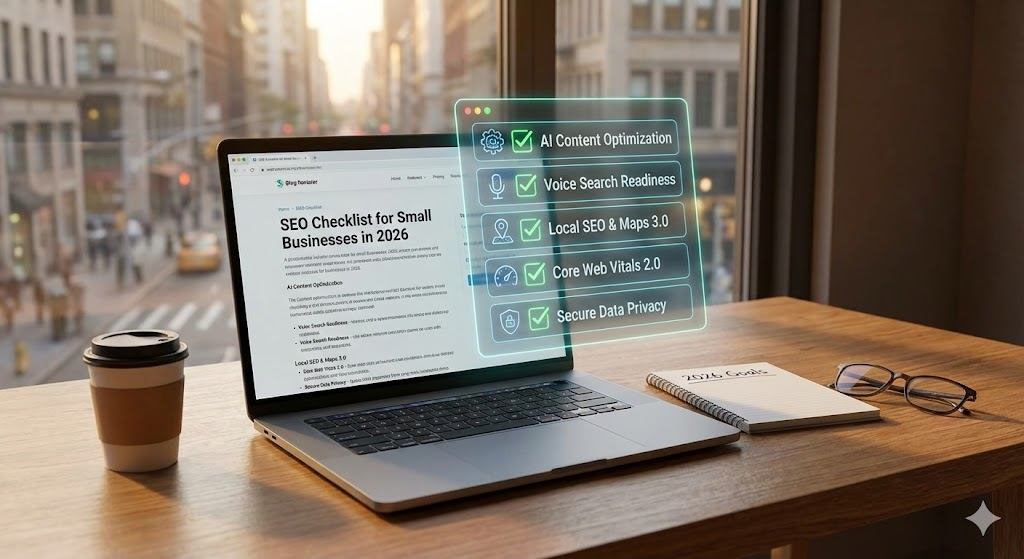
The landscape of Search Engine Optimisation (SEO) moves fast. Strategies that worked five years ago—like keyword stuffing or buying cheap backlinks—are now actively penalised. As we settle into 2026, the introduction of AI-driven search results (like Google’s Search Generative Experience) has shifted the goalposts once again.
For small businesses in London, the challenge is two-fold: competing with major corporations and standing out in a crowded local market. But don't panic. The fundamentals of a good user experience remain the same. Here is your essential SEO checklist for 2026 to ensure your business attracts high-quality traffic.
1. Technical Health & Core Web Vitals
Google’s algorithm has zero tolerance for slow, buggy websites. In 2026, "fast" isn't a luxury; it's the baseline.
- Pass Core Web Vitals: Ensure your LCP (loading speed), INP (interactivity), and CLS (visual stability) are all in the "Green" zone.
- Mobile Optimisation: Ensure your site is fully responsive. Google primarily indexes the mobile version of your site.
- Clean Code Structure: Move away from bloated website builders. A custom-coded Python/Django site ensures search engines can crawl your content without getting stuck in messy code.
2. Optimise for AI & "Answer Engines"
Search engines are evolving into "answer engines." Users often get their answer directly on the search results page without clicking a link. To capture traffic, you must be the source of that answer.
- Target Question Keywords: Create content that answers specific questions (e.g., "How much does a loft conversion cost in Hackney?").
- Structure Data (Schema): Use advanced schema markup to help AI understand your pricing, reviews, and services instantly.
- Featured Snippets: Format your answers in clear, concise bullet points or short paragraphs to increase your chances of appearing at the very top (Position Zero).
3. Double Down on E-E-A-T
With AI tools generating generic content by the bucketload, Google places a massive premium on Experience, Expertise, Authoritativeness, and Trustworthiness (E-E-A-T). They want human insight.
- Showcase Real Experience: Don't just list services. Write case studies about specific London projects. Show photos of your team on-site.
- Author Bios: Ensure blog posts are attributed to real experts in your company, not "Admin."
- Get Accredited: Display industry certifications and awards prominently in your footer.
4. Local SEO Dominance
For brick-and-mortar businesses, local search is your lifeline.
- Google Business Profile (GBP): Keep it active. Post weekly updates, upload new photos regularly, and respond to every review within 24 hours.
- Local Keywords: Optimise your landing pages for specific boroughs (e.g., "Accountants in Canary Wharf" vs just "Accountants").
- Local Citations: Ensure your Name, Address, and Phone Number (NAP) are consistent across Yell, Yelp, and industry-specific directories.
5. Content Quality Over Quantity
The days of churning out 500-word generic blog posts are over. AI can do that in seconds, so Google devalues it.
- Depth and Nuance: Write comprehensive guides that cover a topic from every angle.
- Video Content: Embed video walkthroughs or explainers. This increases "dwell time" (how long users stay on your site), a key ranking signal.
- Internal Linking: Create a logical web of links between your pages to help users (and bots) discover more of your content.
6. Security and Trust
Security is a prerequisite for ranking.
- HTTPS Everywhere: Ensure your SSL certificate is valid and covers all subdomains.
- Data Privacy: Ensure you have a clear Privacy Policy and compliant cookie consent forms. Users (and Google) trust transparent sites.
Summary
SEO in 2026 isn't about tricking an algorithm; it's about being the best possible answer for your customer. By combining a high-performance custom website with high-quality, human-centric content, you can build a digital presence that withstands any algorithm update.
Need a technical audit to see where you stand? Book a free strategy session with Custom Coded Websites today.