Django Development Agency
A two-person UK Django studio. We build new Django applications, take over and upgrade existing ones, and connect them to the systems you already use. The developers on your first call are the ones who write the code.
What we do
Most people looking for a Django agency need one of these. We do all six, for businesses and for other agencies.
New Django applications
Booking systems, customer portals, document automation and online shops, planned in stages and built on the current long-term support release.
Taking over a project
Your developer has moved on, or the agency that built it has gone quiet. We review the code, fix what is urgent, then maintain and extend it.
Upgrades
Moving an older project on to a supported release, one version at a time, fixing the deprecation warnings along the way rather than ignoring them.
APIs & integrations
Django REST Framework when your platform needs an API of its own, and webhooks for Stripe, Xero, Google Calendar and email, so each record is entered once.
Databases & performance
PostgreSQL design, fixes for slow pages and queries, and moves off MySQL or SQLite, rehearsed on a copy of your data first.
Hosting & maintenance
Deployment, backups, monitoring and security updates after launch, so the project stays on a supported version.
Need a booking system or client portal built from scratch? See booking systems and custom platforms. Moving a database? Our guide to migrating Django from MySQL to PostgreSQL covers the steps.
Is your Django version still supported?
Each Django release gets security fixes for a fixed period. After that, the site keeps working, but nobody patches it.
| Security fixes until | |
|---|---|
| Django 4.2 LTS and older | Ended (4.2 stopped on 7 April 2026) |
| Django 5.2 LTS | April 2028 |
| Django 6.0 | April 2027 |
| Django 6.1 | December 2027 |
Dates from the Django project's own supported versions table, checked in September 2026. The next long-term support release, 6.2, is due in April 2027.
To see which version you are on, run python -m django --version on the server, or look for the Django== line in your requirements.txt. If it says 4.2 or lower, the project is no longer getting security fixes, and nothing on the site will warn you.
We moved this website from Django 4.2 to 5.2 LTS in September 2026. Our approach to any upgrade is the same: read the release notes for every version in between, run the tests with deprecation warnings switched on (python -Wa manage.py test), update the third-party packages that depend on Django, and try it on a staging copy before it goes live. How long it takes depends mostly on how many packages the project uses and how many tests it has.
Django platforms we built and run
Two of the Django applications in our portfolio. Click through and try them.
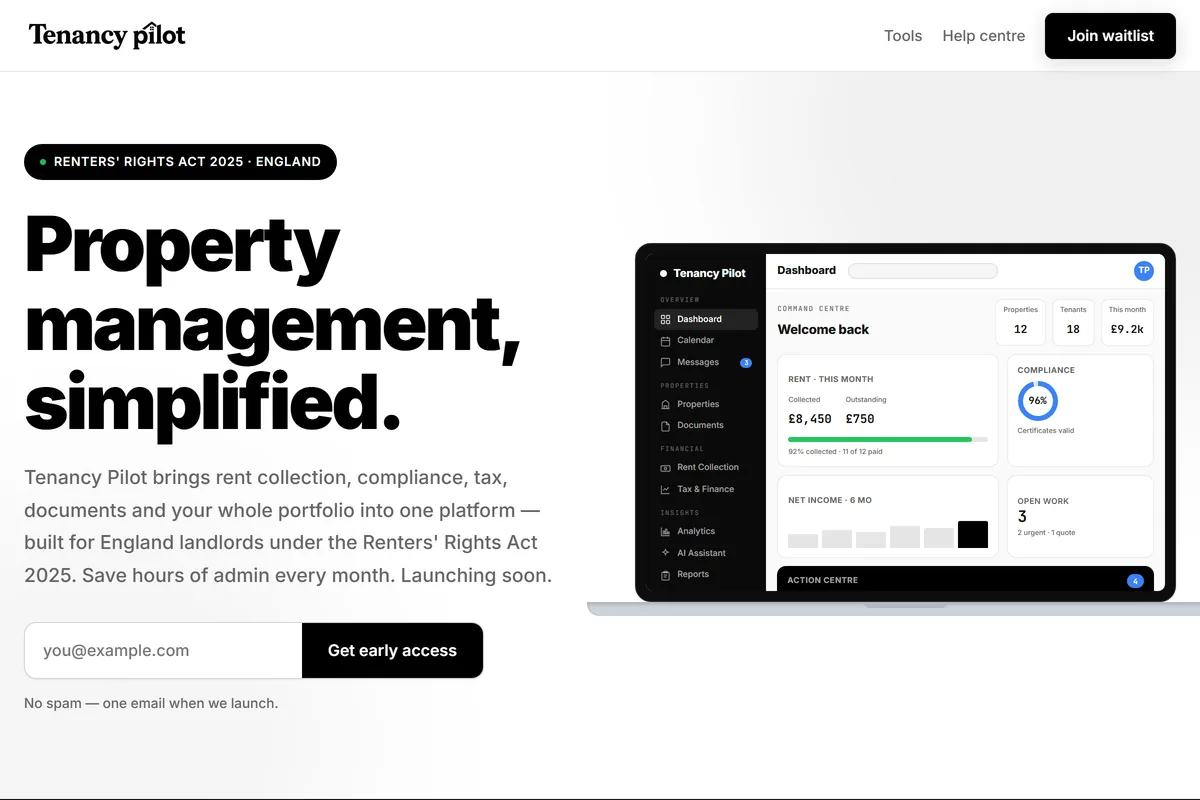 Tenancy Pilot
Property management platform for UK landlords, ready for the Renters' Rights Act 2025.
Tenancy Pilot
Property management platform for UK landlords, ready for the Renters' Rights Act 2025.
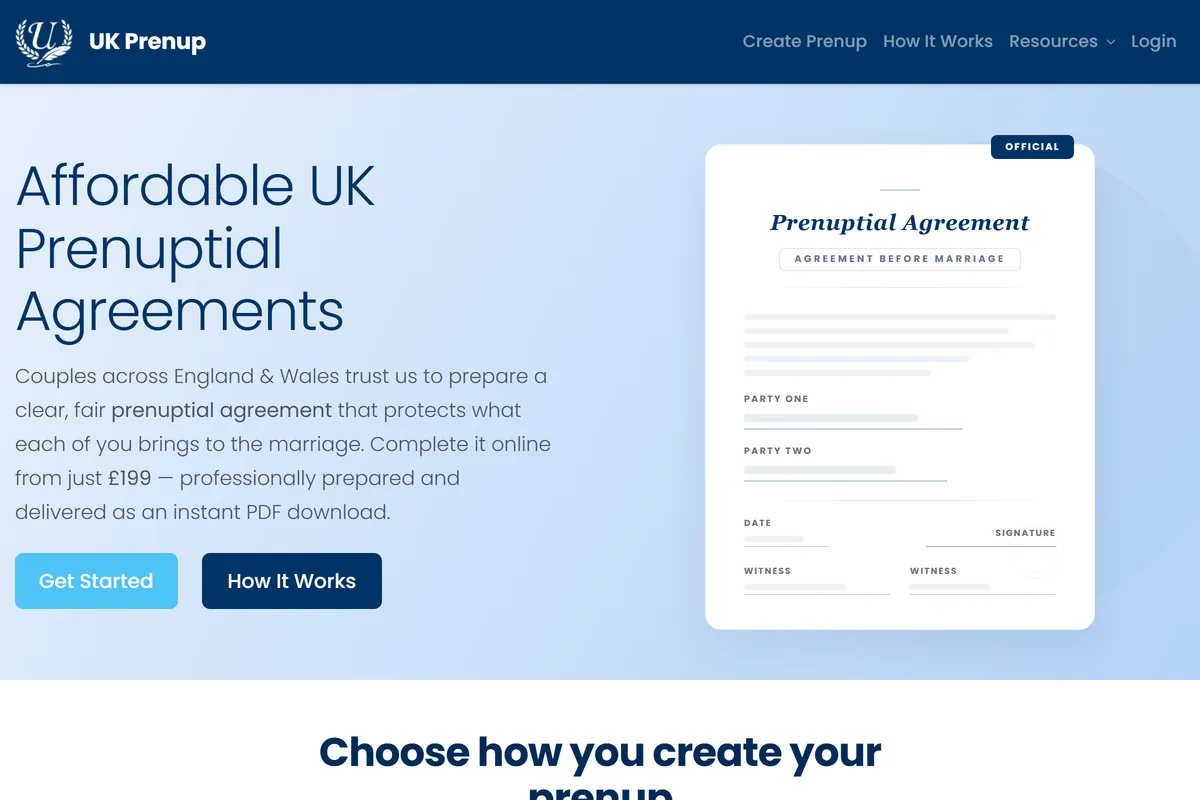 UK Prenup
Online prenuptial agreements for couples in England and Wales, guided, generated and delivered.
UK Prenup
Online prenuptial agreements for couples in England and Wales, guided, generated and delivered.
The UK Name Change case study shows how one of our Django platforms takes a customer from form to paid, generated document with no one touching it. More in our portfolio.
Taking over an existing project
Before we change anything, we find out what we are dealing with. These are the first things we check.
The Django version and packages
Which releases are out of support, and which installed packages have published vulnerabilities. pip-audit checks a requirements.txt against the public advisory databases in seconds.
Settings that should never reach production
DEBUG switched on, a secret key committed to the repository, missing HTTPS or security headers. Django's own python manage.py check --deploy flags most of these.
Backups and a way back
Whether backups exist, and whether anyone has ever restored one. We do not change a live site until we know we can undo the change.
Tests
What the tests cover and what they miss, so we know where changes are safe. Where there are none, we write tests for the parts we are about to touch.
Then we tell you in plain English what is urgent, what can wait and what fixing it would cost. If a rebuild would serve you better than repairs, we will explain why before recommending it.
Django developers for agencies
If you are an agency with a Django project and not enough Django developers, we can work under your brand. We sign an NDA first, you keep the client relationship and the credit, and we write, test and document the code without our name appearing anywhere in it.
See white-label development for agencies for how that works.
How it works
The two developers you speak to on the first call are the two who write your code.
Free call
Tell us what you need built, fixed or upgraded. For an existing project, we can look at the code before we quote.
Fixed quote
A written scope, split into stages, with what each stage costs and how long it takes.
We build it
On a staging site you can log in to, so you test real features as they land.
Launch & care
We ship it with a 30-day bug-fix warranty, then host, monitor and update it on a maintenance plan.
Common questions
Which version of Django do you use?
New projects start on the current long-term support release, Django 5.2 LTS, which receives security fixes until April 2028. We move older projects on to it as well.
Can you take over a Django project another developer built?
Yes. We start by reviewing the code, packages and hosting, fix anything urgent such as an unsupported Django version or DEBUG left on in production, then maintain or extend it. If a rebuild would genuinely serve you better, we will explain why before recommending it.
How much does Django development cost?
Every project gets a fixed quote after a free call, split into stages so you know what each stage costs before it starts. For an existing project, the biggest factors are how far out of date it is and whether it has tests.
Do you work with other agencies?
Yes. We do white-label Django development for agencies: you keep the client relationship and the credit, and we write, test and document the code.
Why Django rather than WordPress?
WordPress suits most content-led websites. Django earns its cost when the website is really software: bookings with your own rules, customer accounts, payments, or connections to other systems. Our WordPress vs Django comparison goes into the detail.
Will I own the code?
Yes. Once the project is paid for, you own the code we write for you and all of your data. Django and the other open-source tools we build on keep their own licences, which allow commercial use.
Need a Django developer?
Tell us what you need built, fixed or upgraded, and we'll tell you what we would do, what it would cost and how long it would take.
Free 30-minute call · No commitment required